Many Moroccan brands start selling on Instagram: a post, a few DMs, a WhatsApp chat, and the order goes out with a delivery company. It works — until it doesn't. Messages get lost, stock is guessed, and customers wait hours for a price.
This guide explains how online selling really works in Morocco in 2026 and how to move from “DM for price” to a real online store without losing the habits your customers love.
How Moroccan customers like to buy online
- Cash on delivery (COD) is still the most trusted way to pay. Many customers want to see the product before paying.
- WhatsApp is where questions, confirmations and follow-ups happen.
- Card payment is growing, especially for younger buyers and higher-value orders. In Morocco it usually goes through CMI or a payment provider connected to Moroccan banks.
- Fast delivery matters: customers compare you with the big marketplaces.
Three ways to sell online (and when each one fits)
1. Social media + WhatsApp only
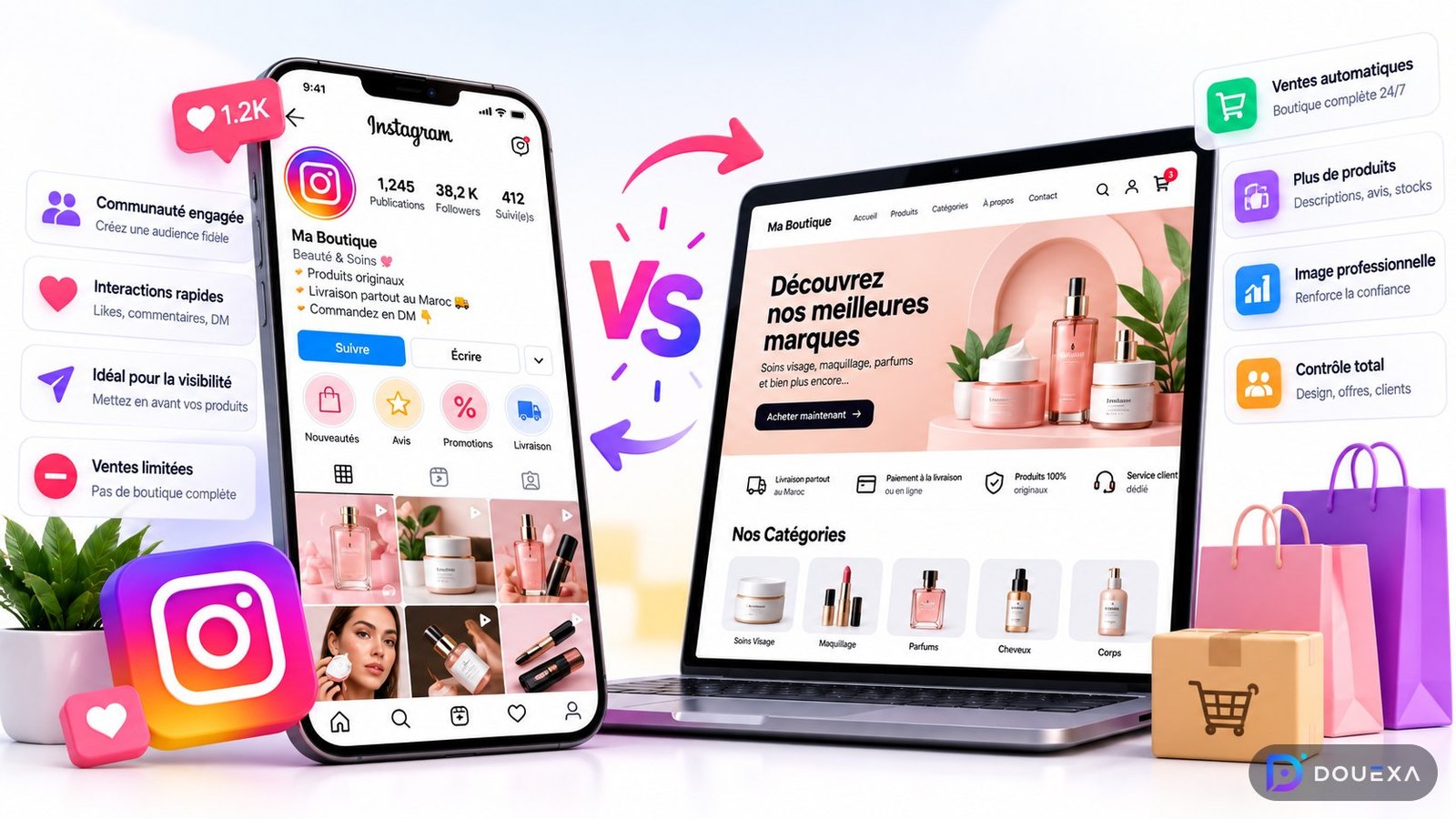
Good for testing a product. Zero setup cost, but everything is manual: prices in DMs, orders in chat, stock on paper. It becomes hard after a few orders a day.
2. Marketplaces
Big platforms bring traffic, but you pay commission, compete on price next to many sellers, and the customer belongs to the marketplace — not to you.
3. Your own online store
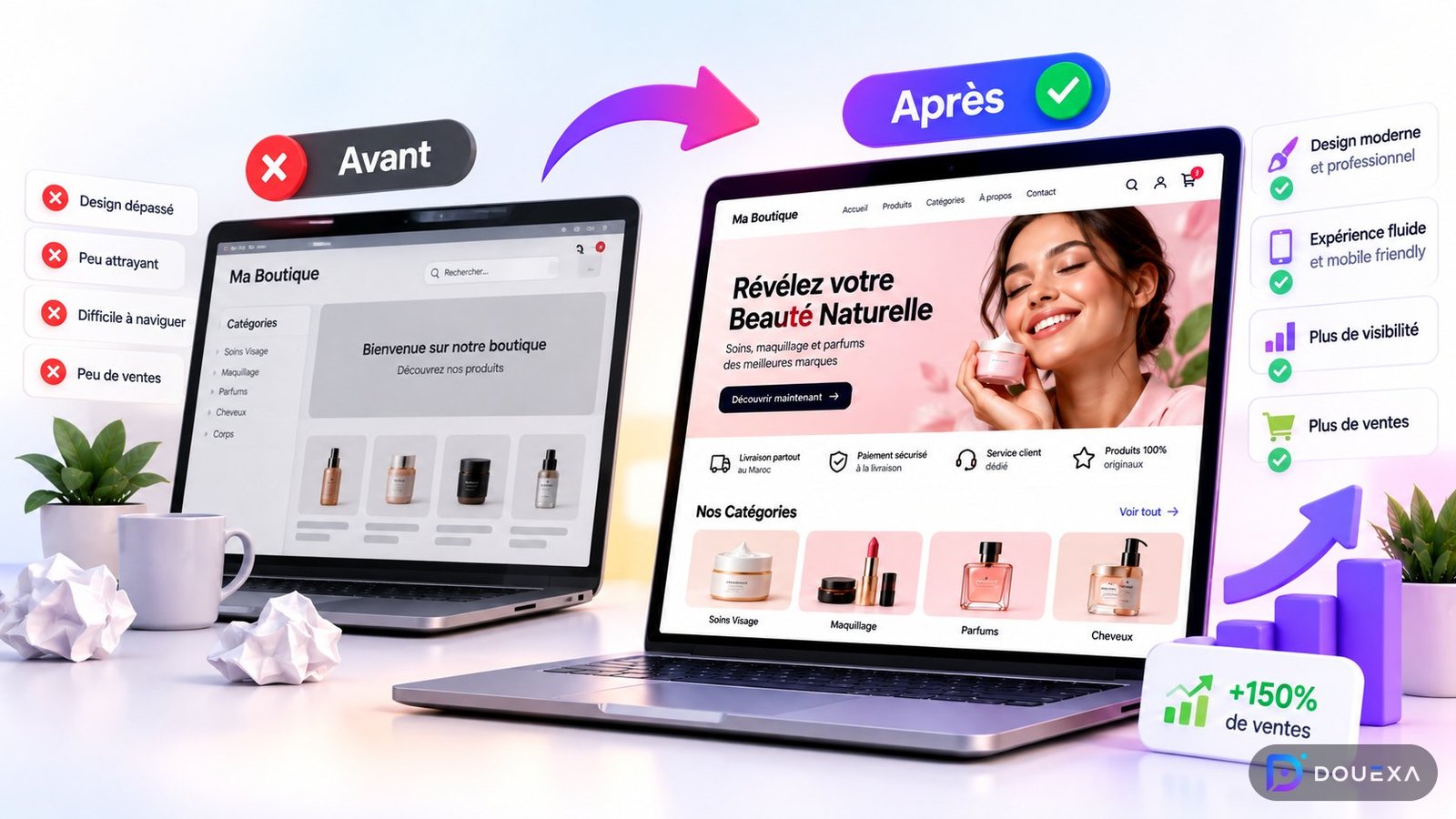
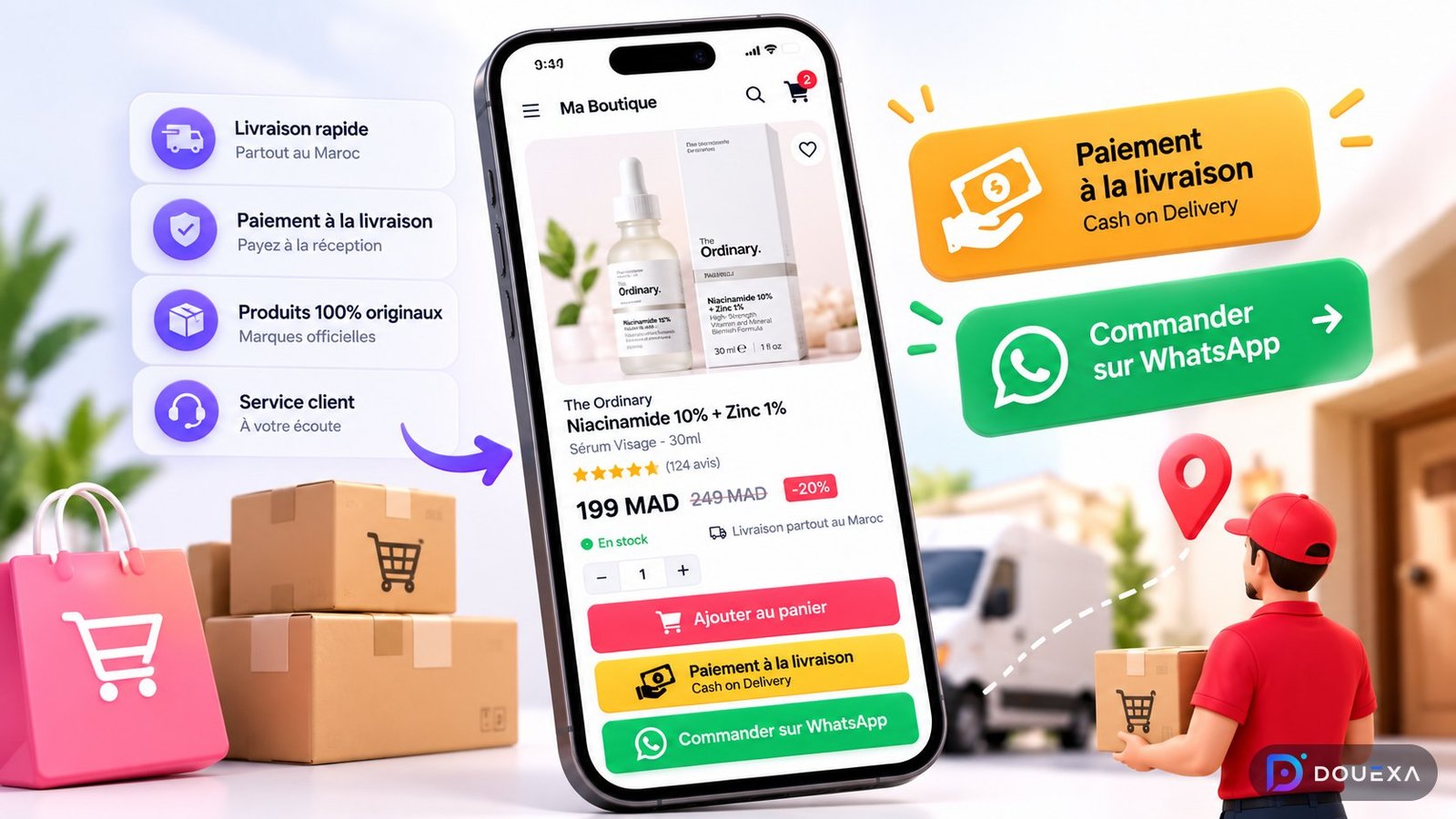
Your brand, your prices, your customer list. A good Moroccan store combines a clear catalogue, a simple cart, cash on delivery, an optional card payment and a “Order on WhatsApp” button for people who prefer to chat first.
How a cash-on-delivery order flows
This is the flow we set up for most stores: the customer orders, the shop confirms by WhatsApp or phone, the delivery company collects the cash, and the store tracks everything in one dashboard.
What your online store needs on day one
- Fast mobile pages — most orders come from a phone.
- Clear prices and delivery fees shown before checkout.
- Short checkout: name, phone, city, address. No forced account.
- COD + WhatsApp order button, and card payment when you are ready.
- Stock and order dashboard so you stop guessing what is left.
- French and Arabic product pages if your customers use both.
- Basic SEO so products can be found on Google, not only on Instagram.
Online store projects usually fall between 4,000 and 15,000 MAD depending on the number of products, payment options and integrations. See the details on our e-commerce service page or estimate your budget with our website cost guide.
Delivery: choosing a partner
Most Moroccan online stores work with a delivery company that picks up parcels, delivers in the main cities and collects the cash. When comparing partners, look at the cities covered, delivery time, the fee per parcel, how fast they transfer the collected cash, and whether they give you a tracking link you can send to customers. Many stores connect the delivery company to their dashboard so parcels and statuses update automatically.
Marketing your store once it is live
- Instagram and TikTok for discovery, always linking to product pages — not just the homepage.
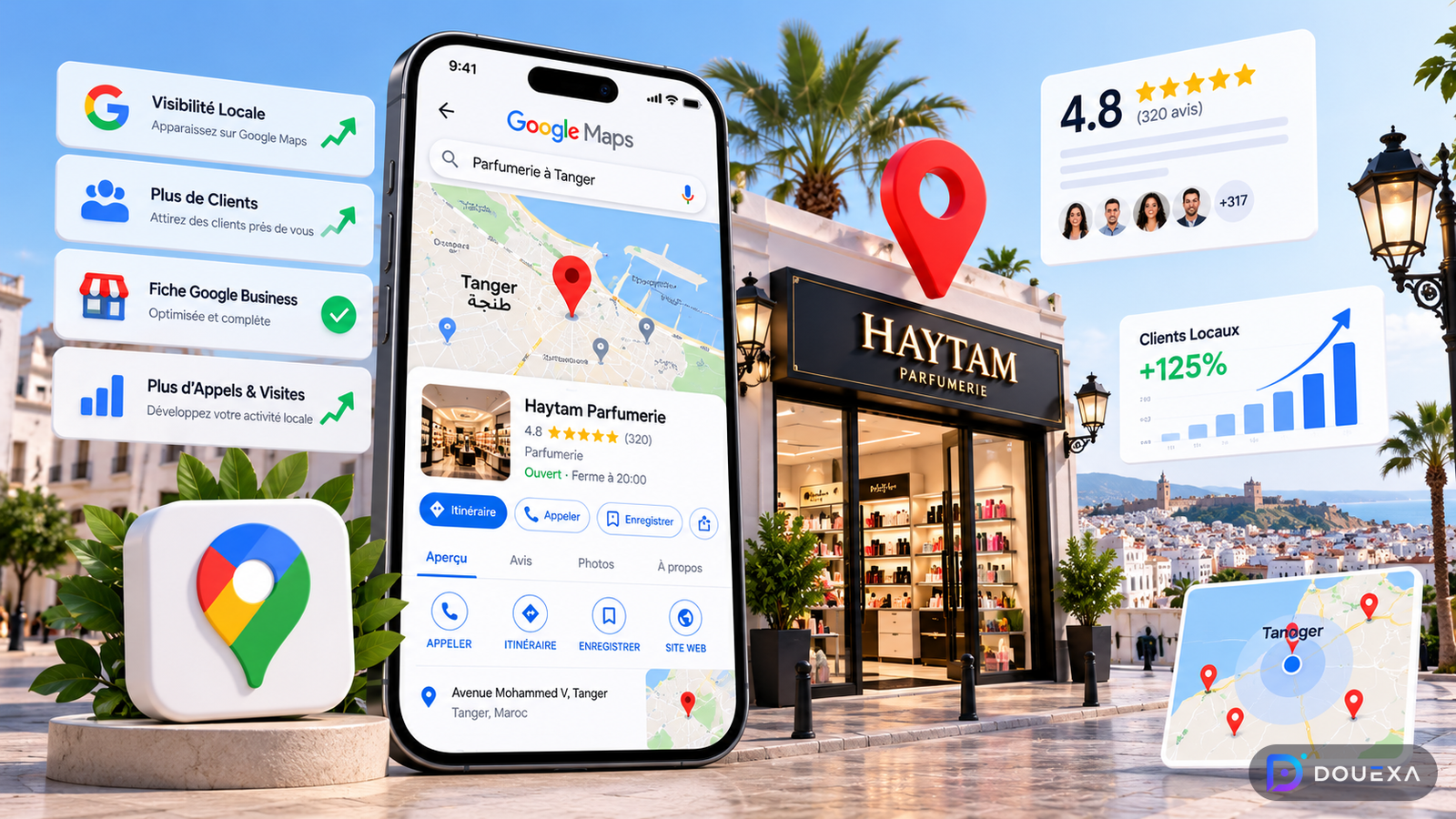
- Google for people already searching for your product: good product titles, descriptions and photos help your pages appear.
- WhatsApp follow-ups for new products, restocks and abandoned carts — without spamming.
- Reviews and photos from customers to build trust for new visitors.
Frequently asked questions
Do I need a registered company to sell online in Morocco?
To accept card payments through a bank or payment provider you normally need a legal business status. Rules change, so confirm the current requirements with your bank or an accountant before launching card payments.
Can I start with cash on delivery only?
Yes. Many stores start with COD and WhatsApp orders, then add card payment once they have steady sales.
Shopify, WooCommerce or a custom store?
Ready platforms are quick to launch. A custom store fits better when you need COD confirmation flows, Moroccan delivery integrations, special pricing or Arabic/French pages exactly the way you want. We help you choose based on your products and budget.
How many products do I need to start?
Even 10–20 well-presented products are enough to launch. Quality photos and clear descriptions matter more than a huge catalogue.